
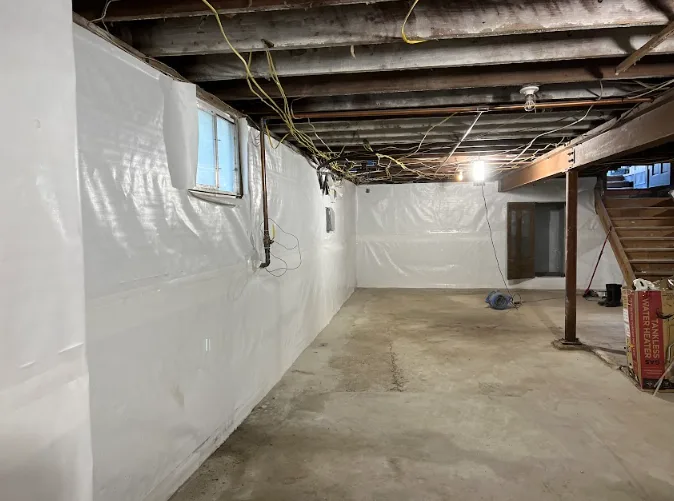
A damp basement is one of those problems that starts small and gets expensive fast. Water finds its way through foundation walls and floor joints in ways that aren’t always obvious a hairline crack here, a porous block wall there and by the time a homeowner notices a real problem, the damage is often already underway.
Waterproofing sealants are one of the most widely researched solutions for this problem, and the market is full of options that each claim to be the best. The reality is more nuanced. Different sealant types work differently, on different surfaces, for different kinds of water intrusion. Choosing the wrong one doesn’t just waste money it can delay addressing a problem that continues to worsen underneath a coat of product that was never right for the situation.
This guide breaks down the main types of basement waterproofing sealants, how each one works, what it’s actually suited for, and where the limits of a DIY sealant approach end and professional waterproofing begins.
Why Basement Walls Leak in the First Place?
Understanding the Problem Before Choosing a Solution
Before comparing sealants, it’s worth understanding what you’re actually dealing with. Basement water intrusion in Texas homes typically comes from one of three sources.
Hydrostatic pressure occurs when water-saturated soil pushes against the exterior of foundation walls. This pressure is significant and persistent it doesn’t go away when the rain stops because the soil holds moisture long after surface conditions dry out. Hydrostatic pressure drives water through porous concrete and concrete block in ways that surface-applied sealants often can’t fully counteract.
Capillary action pulls water through the microscopic pores in concrete and masonry even without visible cracks. Concrete is not inherently waterproof it is porous, and water moves through it slowly but consistently when exterior moisture levels are high.
Cracks and joint failures provide direct pathways for water entry. Settlement cracks, shrinkage cracks, and failed control joints all allow water to move through what should be a solid barrier with minimal resistance.
Understanding which of these is driving the water into your basement determines which approach and which sealant type, if any is appropriate.
The Main Types of Waterproofing Sealants
Crystalline Waterproofing Sealants
Crystalline sealants work through a chemical reaction with the concrete substrate. When applied to a damp concrete surface, the active chemicals penetrate into the concrete matrix and form crystals within the pores and capillary tracts physically blocking the pathways through which water moves.
The key advantage of crystalline sealants is that they become part of the concrete rather than sitting on top of it as a coating. They don’t peel, they aren’t affected by hydrostatic pressure from the exterior side, and they continue to grow and self-seal in the presence of moisture over time. They’re particularly well suited for poured concrete walls with capillary moisture intrusion and minor cracking.
The limitation is that they require a clean, properly prepared concrete surface to bond correctly, and they are not the right solution for active water flow through significant cracks or for concrete block walls where the voids between blocks create pathways that crystalline chemistry alone can’t address.
Epoxy Sealants and Injection Systems
Epoxy is the material of choice for structural crack repair in concrete. It bonds with exceptional strength stronger than the concrete itself when applied correctly and creates a rigid, impermeable seal within the crack.
Epoxy injection is the standard professional approach for repairing structural cracks in poured concrete foundation walls. The process involves injecting epoxy under low pressure into the full depth of the crack from the interior side, filling the void completely and restoring both the waterproofing integrity and the structural continuity of the wall.
The limitation of epoxy for waterproofing is that it is rigid. In conditions where the crack is still experiencing movement due to thermal cycling, ongoing settlement, or soil pressure variation a rigid epoxy repair can re-crack. For active or moving cracks, polyurethane is typically the better material.
Polyurethane Sealants and Injection Foams
Polyurethane waterproofing products are flexible, which makes them particularly well suited for cracks that experience movement or for sealing joints between different materials such as the cold joint between a basement floor slab and the foundation wall, which is one of the most common water entry points in residential basements.
Polyurethane injection foam is used professionally for sealing active leaks cracks with water flowing through them at the time of repair. The foam expands on contact with moisture, filling the crack and stopping water flow even while conditions are wet. This makes it uniquely useful for emergency leak situations where waiting for dry conditions isn’t practical.
Surface-applied polyurethane sealants are also widely available in caulk form for joint sealing and surface crack repair. They remain flexible after curing and handle movement better than rigid alternatives. They work well as part of a broader waterproofing strategy but are not a standalone solution for significant moisture intrusion through porous walls.
Silicate-Based Penetrating Sealers
Silicate sealers sometimes called densifiers penetrate into the surface of concrete and react with the calcium compounds present to form additional crystalline material within the pores. They’re most commonly used on concrete floors and horizontal surfaces to reduce surface porosity and improve durability.
For basement floors experiencing minor moisture vapor transmission dampness that manifests as condensation or slight surface moisture rather than active water pooling a silicate sealer can provide meaningful improvement. They are not appropriate for walls experiencing hydrostatic pressure or for active crack leaks.
Hydraulic Cement
Hydraulic cement is a fast-setting material used to plug active water leaks holes, cracks, and pipe penetrations where water is actively flowing. It sets in minutes even in the presence of running water and provides an immediate physical barrier.
It is a repair material rather than a comprehensive waterproofing solution. Hydraulic cement plugs the immediate point of entry but does nothing to address the hydrostatic pressure or broader moisture conditions that caused the leak. It is most useful as part of a professional repair sequence rather than as a standalone fix.
Comparing Sealant Types at a Glance
Which Sealant Works for Which Problem
Understanding which product matches which condition is the most practical takeaway from the comparison:
- Active crack leaks with water flowing polyurethane injection foam or hydraulic cement as an immediate plug, followed by a more comprehensive repair
- Structural cracks in poured concrete, stable and dry epoxy injection for the strongest, most permanent repair
- Moving or dynamic cracks polyurethane injection for flexibility that accommodates movement
- Porous concrete walls with capillary moisture crystalline waterproofing sealant applied to properly prepared surface
- Concrete floor moisture vapor silicate penetrating sealer
- Joint sealing and transitions flexible polyurethane caulk appropriate for movement joints
Where DIY Sealants Have Real Limits?
What Products Can and Can’t Do?
The honest limitation of any surface-applied or injected sealant is that it addresses the interior symptoms of a water intrusion problem while the source of that problem remains on the exterior side of the wall. Hydrostatic pressure from water-saturated soil doesn’t stop because the interior surface has been coated. In significant moisture conditions, that pressure finds new pathways around the edges of a sealant application, through adjacent sections of wall, or through the floor slab.
This is why professional waterproofing systems interior drainage channels, sump pump systems, exterior waterproofing membranes, and French drain installation produce more reliable long-term results for serious moisture problems than sealant products alone. Sealants are a valuable component of a comprehensive approach, but they are rarely a complete solution for significant water intrusion on their own.
For Texas homeowners dealing with more than minor surface moisture, a professional basement waterproofing inspection is the most important step before committing to any product or approach. Understanding what’s actually driving the moisture into the space is what determines whether a sealant approach is appropriate or whether a more comprehensive solution is needed.
Surface Preparation The Step Most DIY Attempts Skip
Why Prep Determines Whether Any Sealant Works?
The single most common reason DIY sealant applications fail is inadequate surface preparation. Every sealant type crystalline, epoxy, polyurethane, silicate requires a clean, sound substrate to bond correctly. Efflorescence the white mineral deposits that appear on basement walls as water carries dissolved salts to the surface must be removed before sealant application. Loose or deteriorating concrete must be ground away. Oil, paint, and previous sealant applications may need to be removed entirely before a new product can adhere.
Skipping preparation produces a sealant layer that looks applied but fails within months peeling, delaminating, or simply allowing water to find its way around the bond line. Proper prep often takes longer than the actual sealant application, which is why it’s the step most commonly shortened when homeowners are working on their own.
When to Call a Professional?
Signs the Problem Is Beyond Sealant Solutions
Some moisture conditions are appropriate for informed DIY sealant work. Others clearly require professional intervention. Call a professional when:
- Water is actively flowing through the wall or floor rather than seeping slowly
- Cracks are wider than a hairline or show signs of ongoing movement
- Significant efflorescence indicates long-standing moisture intrusion
- Mold growth is present indicating sustained moisture levels that sealants alone won’t resolve
- Multiple water entry points are present throughout the basement
- The home has experienced flooding or standing water
TB Kings’ basement waterproofing services address the full range of Texas basement moisture conditions from sealant-appropriate surface repairs through comprehensive interior drainage and waterproofing systems for more serious problems. The team has over 60 years of combined experience with Texas soil and foundation conditions and is the only basement company in the state offering a lifetime transferable warranty on its work.
For crack repair specifically, professional epoxy and polyurethane injection delivers a more reliable and longer-lasting result than surface-applied products because the repair material fills the full depth of the crack rather than just coating its surface.
Getting a Professional Assessment
The most reliable first step for any Texas homeowner dealing with basement moisture is a professional evaluation that identifies what’s actually driving the problem before any product is purchased or applied. TB Kings provides expert consultations and inspections for homeowners across Texas, with honest assessments of what the situation requires and what it will cost to address it properly.
To schedule a consultation, contact TB Kings at 214-548-6949, email wking@thebasementkings.net The team responds within 24 hours.
Frequently Asked Questions
Interior sealants can reduce moisture vapor transmission and address minor surface porosity, but they cannot counteract significant hydrostatic pressure from water-saturated soil on the exterior. For serious moisture intrusion, interior drainage and waterproofing systems provide more reliable long-term results. A professional assessment is the best way to determine what your specific situation requires.
This varies significantly by product type and the conditions they’re applied in. Crystalline sealants that penetrate properly into concrete can last the life of the structure. Surface-applied coatings typically last five to ten years before reapplication is needed. Epoxy crack injections are permanent repairs when applied correctly to stable cracks. Polyurethane joint sealants typically last five to fifteen years depending on movement and conditions.
Efflorescence is the white mineral deposit left on concrete surfaces when water carries dissolved salts through the wall and evaporates. It must be removed before any sealant application most sealants cannot bond properly to an efflorescence-covered surface. Its presence also indicates ongoing moisture movement through the wall that sealants alone may not fully resolve.
It depends on the crack. Epoxy is stronger and better for stable, non-moving structural cracks where restoration of structural integrity matters. Polyurethane is more flexible and better for cracks that experience movement, active leaks, or joint transitions between different materials. A professional can determine which is appropriate for your specific crack after inspection.
Concrete block walls present a more complex challenge than poured concrete because the voids within the blocks and the mortar joints create multiple pathways for water. Crystalline sealants can help reduce porosity through the block faces, but the mortar joints and block voids often require more comprehensive treatment. TB Kings’ sealed basement services address the full scope of block wall waterproofing for Texas homes.
When hydrostatic pressure from exterior groundwater is the primary driver of basement moisture, managing water at the perimeter of the foundation through a French drain installation often produces better long-term results than any interior sealant approach. Sealants address the wall surface; a French drain addresses the water pressure causing the problem in the first place.